Kok-Boru — The Traditional Horseback Game of Kyrgyz Nomads
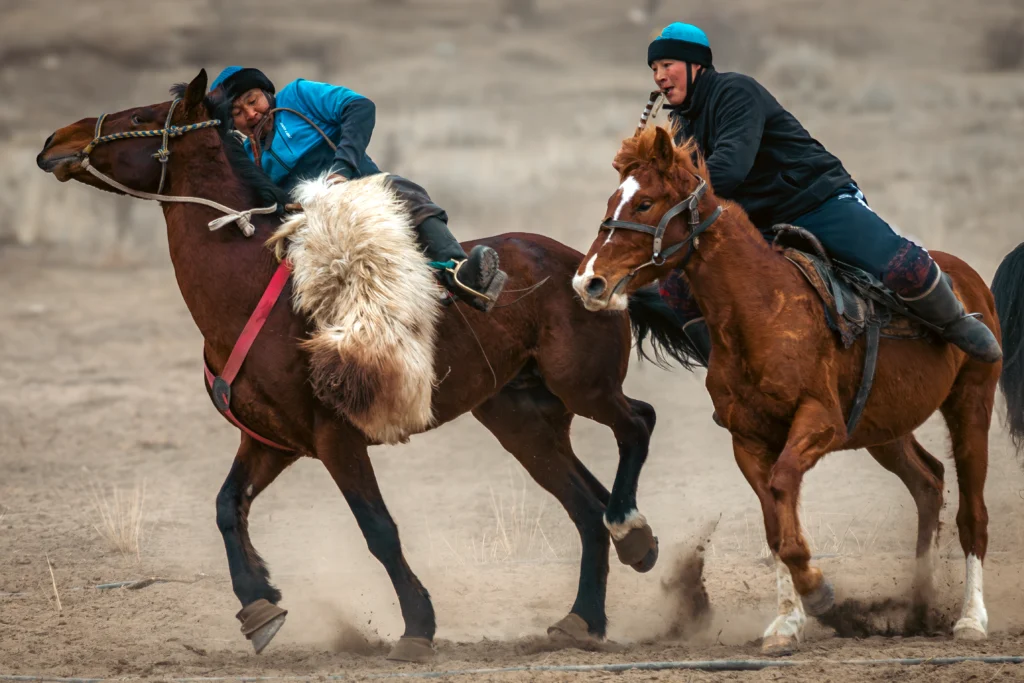
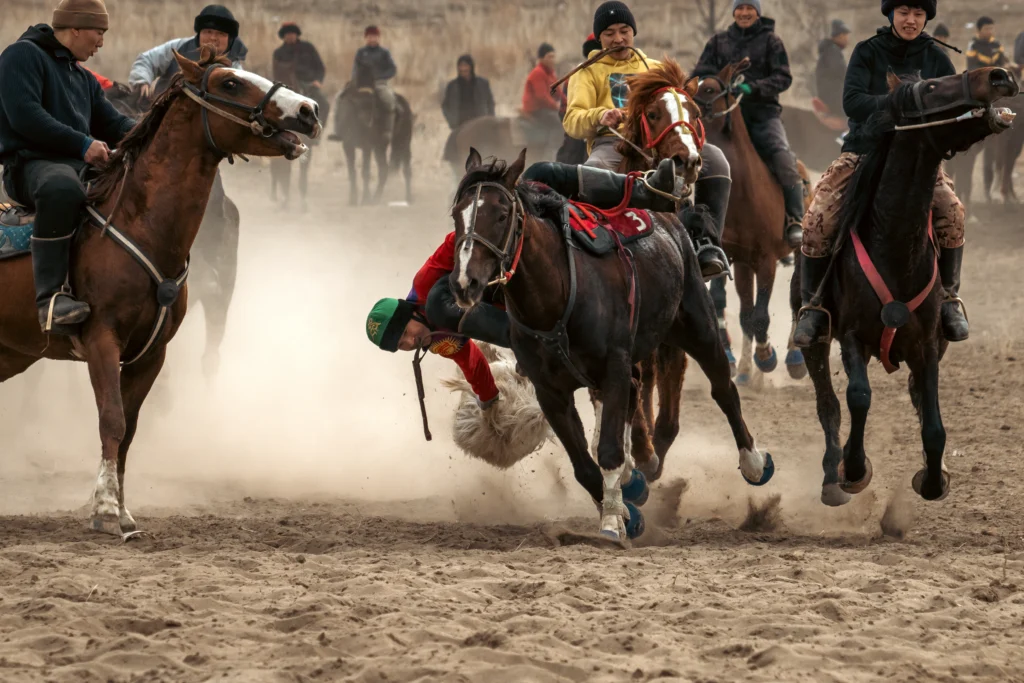
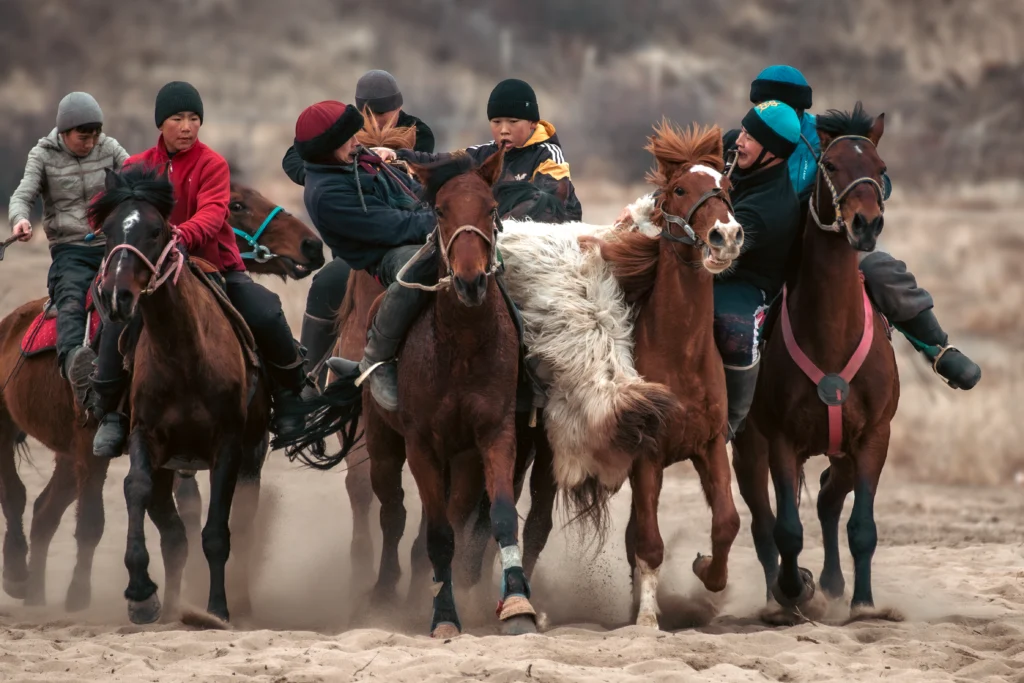
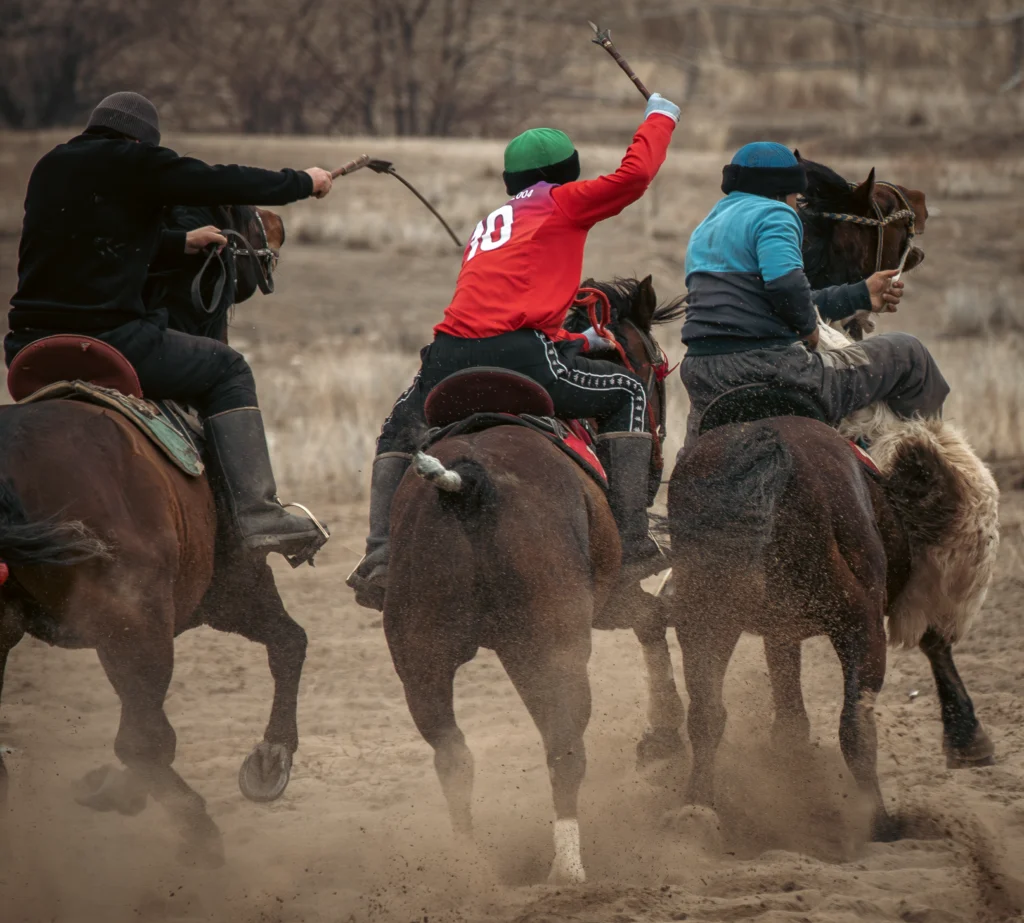
Among the many traditions of the Kyrgyz people, kok-boru stands out as one of the most powerful and visually striking. It is a horseback game played across the steppes and valleys of Central Asia, where riders compete for control of a goat carcass and attempt to score by placing it into a large goal known as a tai-kazan.
For outsiders, the game often looks like a mix of rugby and polo played on horseback. For locals, however, kok-boru is far more than a sport — it is a symbol of nomadic heritage, horsemanship, courage, and teamwork.
In 2017, kok-boru was officially inscribed on the UNESCO Representative List of the Intangible Cultural Heritage of Humanity, highlighting its deep cultural importance for the peoples of Central Asia.
History and Origins of Kok-Boru
The roots of kok-boru stretch back many centuries to the era of nomadic Turkic tribes. Life on the steppe required exceptional riding skills, quick reflexes, and strong horses. Games like kok-boru helped train warriors for battle while also strengthening bonds within the community.
One of the most widely told Kyrgyz legends explains how the game began.
When warriors left their villages for long campaigns that sometimes lasted several years, wolves would multiply in the mountains and attack livestock. After returning home, the horsemen organized hunts to track down the wolves. Riders would chase the animals on horseback, kill them, and lift the body across the saddle. Other riders would then try to take the wolf away.
What Does Kok-Boru Mean?
The name kok-boru comes from the Kyrgyz language.
• “Kök” can mean blue, gray, or sky
• “Börü” means wolf
Together the phrase is often translated as “gray wolf.”
Another commonly used name for the game is “ulak tartysh,” which literally means “pulling the goat.” Both names refer to the traditional origins of the sport and the object used during the match.
Over time, this act of competition evolved into a game known as “kök-börü,” meaning “gray wolf.” Eventually wolves were replaced with the carcass of a young goat, which became the standard object used in the game.
Although kok-boru remained a traditional rural pastime for generations, modern sports rules were introduced in 1996 in Kyrgyzstan by the well-known filmmaker Bolot Shamshiev. Soon after, organized competitions began to appear.
Today the sport is governed by national and international federations, and it has become the central event of the World Nomad Games, first held in Kyrgyzstan in 2014.
Modern Rules of Kok-Boru
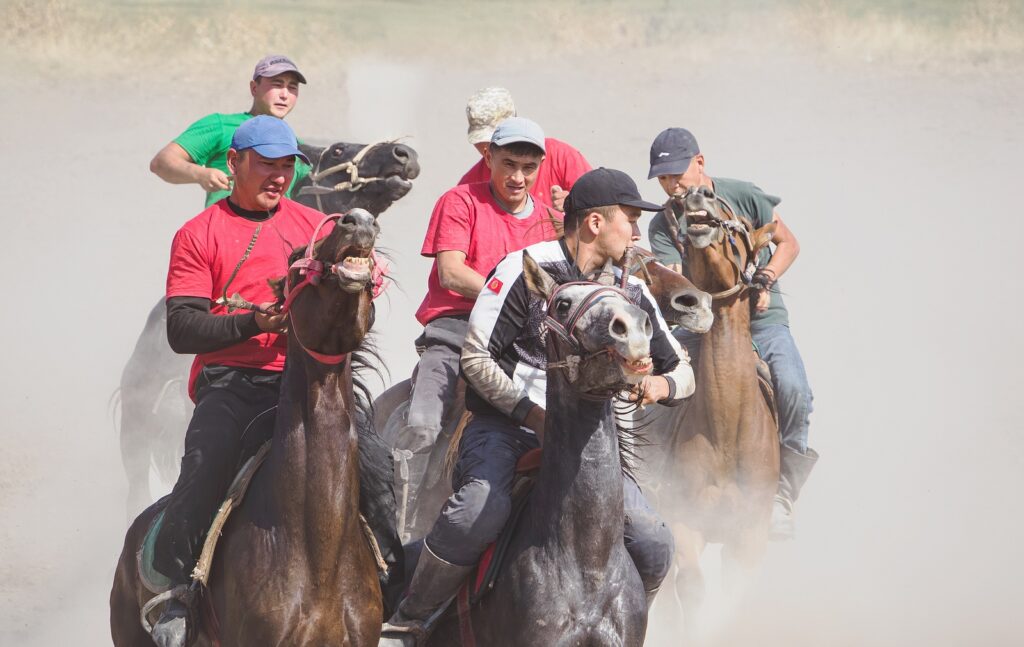
Modern kok-boru follows structured rules established by the international federation.
Field
• Length: approximately 200 meters
• Width: around 70 meters
• Surrounded by a fence about 1.5 meters high
Goals
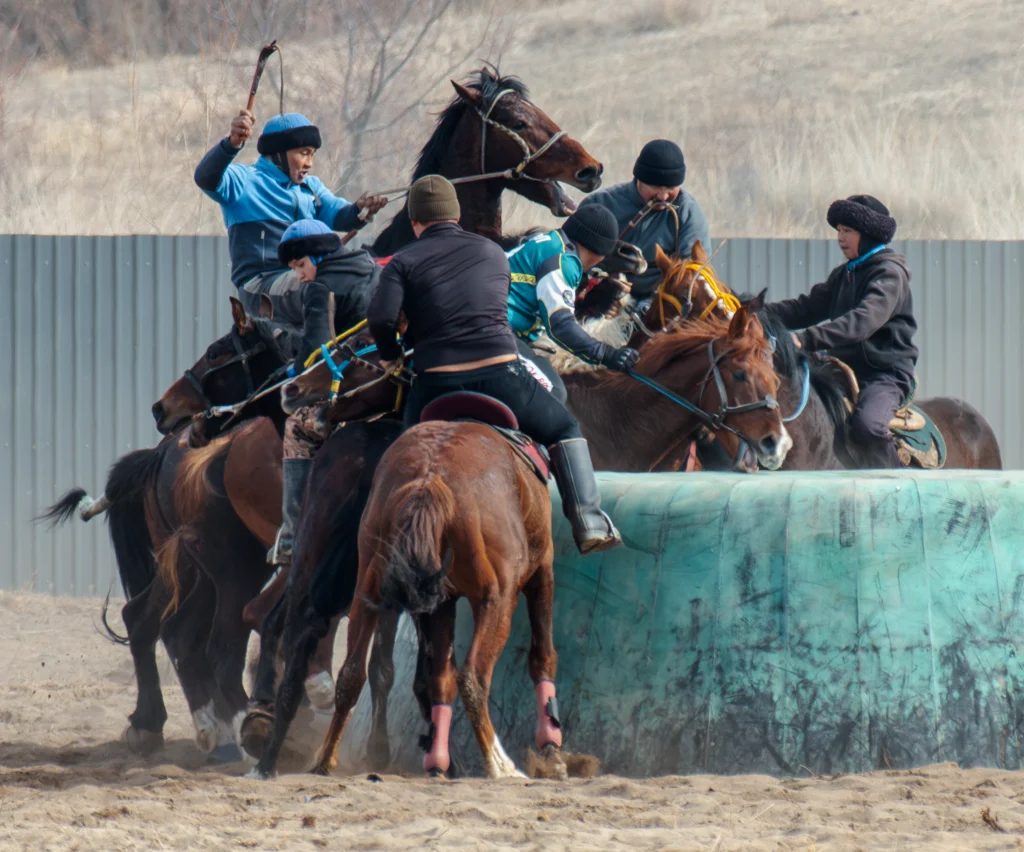
At both ends of the field are large circular pits called tai-kazans.
These serve as the goals where players score points.
Teams
• Each team has 8–12 riders on the roster
• 4 players from each team are on the field at one time
• Substitutions can happen during the match
Game Object
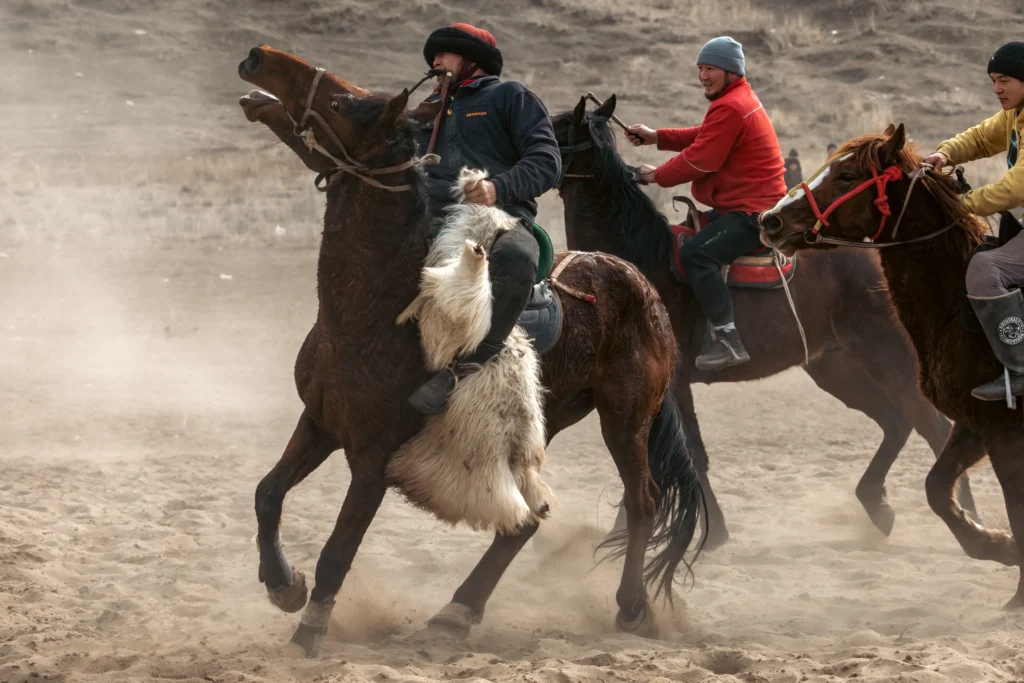
The object used in the game is the carcass of a goat, weighing roughly 30–35 kilograms. The head and internal organs are removed, but the hide remains to make it easier for riders to grip.
Match Duration
• Three periods of 20 minutes
• Breaks of about 10 minutes between periods
Objective
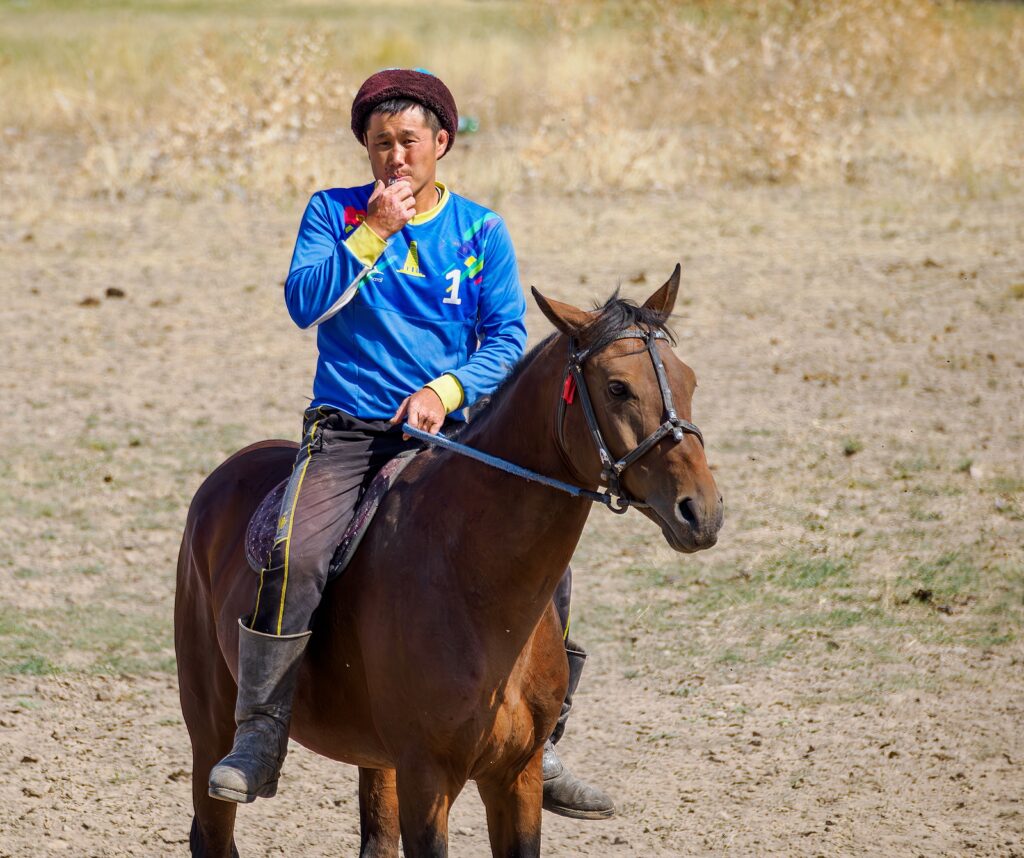
Players must pick up the carcass from the ground or steal it from another rider and carry it across the field to drop it into the opponent’s tai-kazan.
A point counts only when the carcass lands fully inside the goal.
Allowed actions
• Riders can push with their horses
• They can pull the carcass away from opponents
• Passing between teammates is allowed
• Strong physical contact between riders and horses is common
Prohibited actions
• Striking opponents with whips or hands
• Dangerous high-speed collisions
• Tying the carcass to the saddle
• Blocking the field intentionally with a horse
Violations may lead to penalties, temporary suspension from the game, or even disqualification.
Horses in Kok-Boru
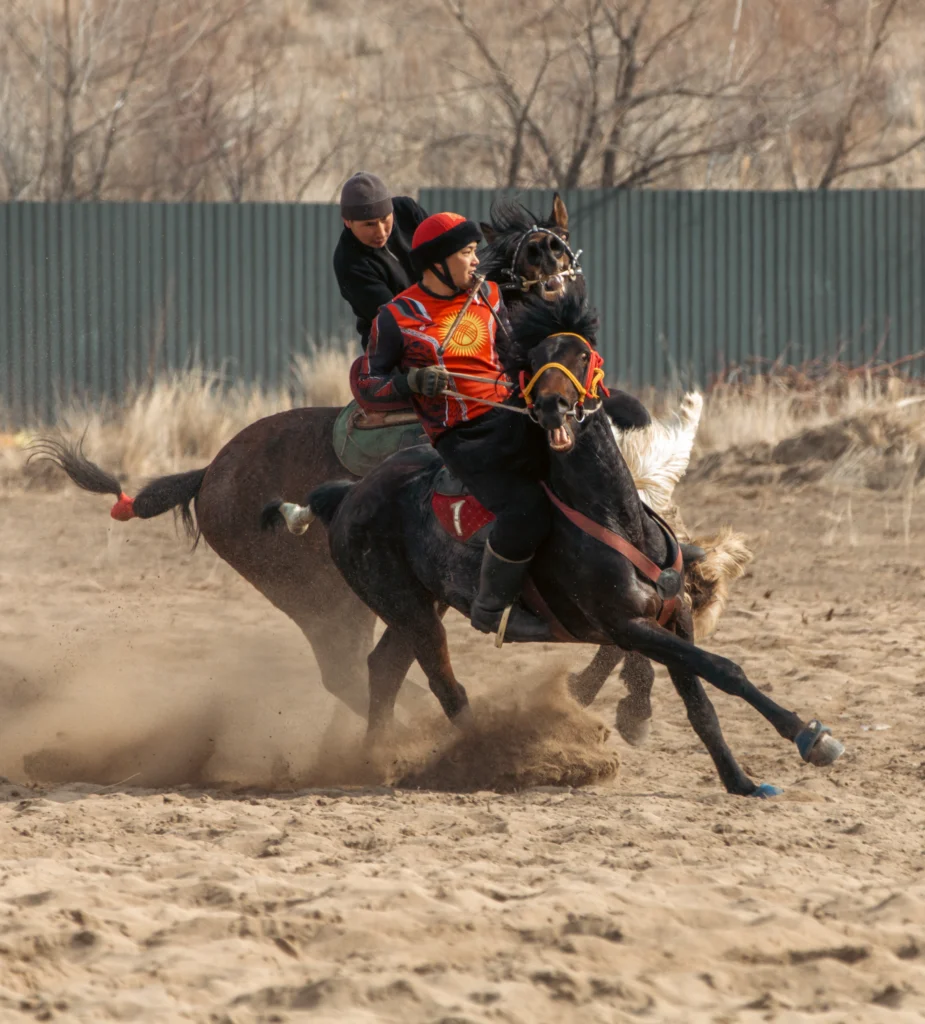
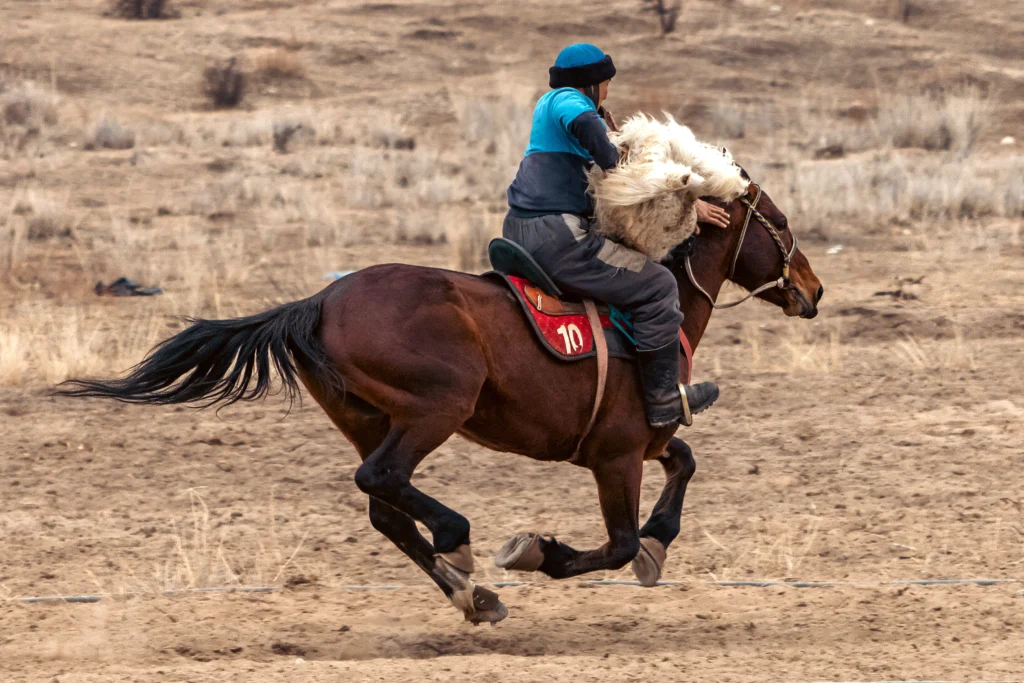
Kok-boru requires exceptionally trained horses.
The animals must remain calm in chaotic conditions, tolerate physical contact, and respond instantly to the rider’s commands.
Most players use strong steppe horses, often stallions or geldings raised specifically for the sport. Training a good kok-boru horse can take several years.
The riders themselves are typically experienced horsemen who have spent much of their lives in the saddle.
Variations of the Game
Different regions of Central Asia have their own versions of kok-boru.
Ulak Tartysh
The traditional version often played in villages, sometimes without formal goals.
Alaman Ulak
A massive free-for-all version where hundreds of riders compete at once, often trying to carry the carcass to their own village.
Kokpar (Kazakhstan)
A related version with slightly different field rules.
Buzkashi (Afghanistan and Tajikistan)
A very intense form of the game, often played with fewer restrictions.
Despite regional differences, the spirit of the game remains the same: strength, strategy, and horsemanship.
Kok-Boru and Kyrgyz Culture
For Kyrgyz people, kok-boru represents the heart of nomadic culture.
Historically it helped young men develop:
• riding skills
• physical strength
• courage
• teamwork
The game is still played today during major celebrations such as Nooruz, village festivals, weddings, and national tournaments. Matches often attract thousands of spectators who gather around the field to watch the dramatic competition unfold.
After traditional matches, the goat used in the game is sometimes cooked and shared among participants — a gesture symbolizing unity and celebration.
Kok-Boru Today
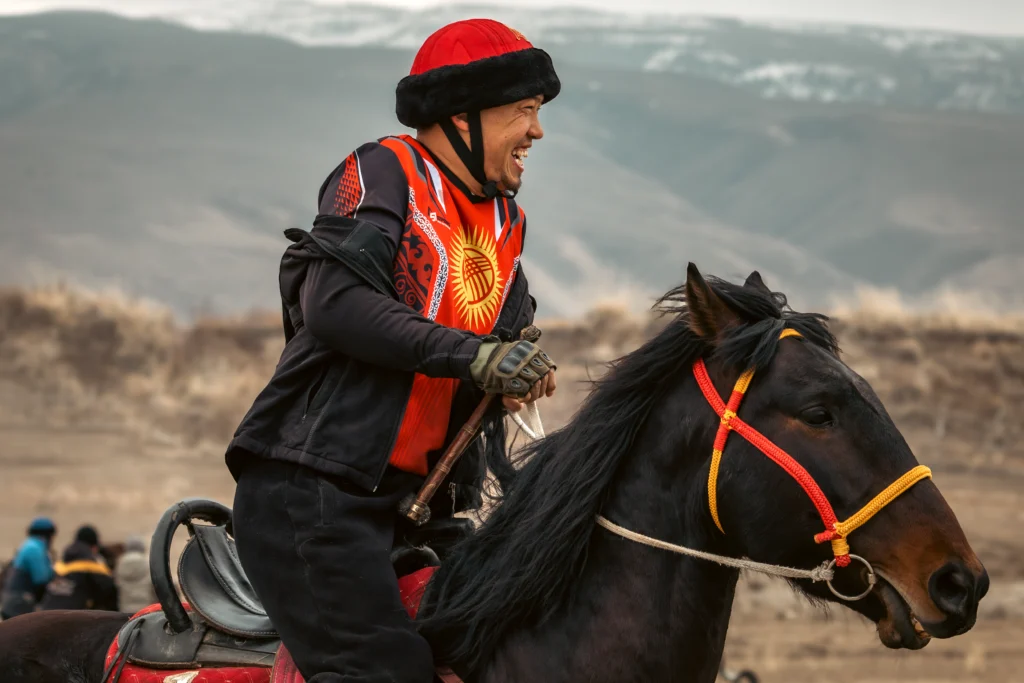
Today kok-boru is considered one of the national sports of Kyrgyzstan. The country regularly hosts international competitions and remains one of the strongest teams in the world.
The sport also gained global attention thanks to the World Nomad Games, an international event dedicated to the preservation of traditional nomadic culture.
World Nomad Games 2026 in Kyrgyzstan
Kok-boru will once again take center stage during the World Nomad Games in 2026, which will be hosted in Kyrgyzstan.
Athletes from many countries will gather to compete in traditional nomadic sports, including kok-boru, wrestling, archery, and eagle hunting. For visitors, the games provide a rare opportunity to experience the living traditions of Central Asian nomadic culture.
Watching a kok-boru match during the World Nomad Games is often described as unforgettable — the speed of the horses, the power of the riders, and the roar of the crowd create an atmosphere unlike any other sporting event.
Conclusion
Kok-boru is more than just a traditional game — it is a living symbol of Kyrgyz nomadic culture. The strength of the riders, the speed of the horses, and the intensity of the competition reflect centuries of life on the steppe, where horsemanship was essential for survival.
Today the sport continues to unite communities across Kyrgyzstan and remains one of the most exciting cultural experiences for visitors to the country. Whether seen during a local festival, a village competition, or at the World Nomad Games, kok-boru offers a powerful glimpse into the spirit of the nomadic world.
For travelers exploring Kyrgyzstan, watching a kok-boru match is not just a spectacle — it is a chance to witness a tradition that has been passed down through generations.