- Introduction
- Brief overview of Tash-Rabat Caravanserai
- Historical significance
- The History of Tash-Rabat
- Origins and construction
- Role in the Silk Road
- Architectural Features
- Design and layout
- Unique architectural elements
- Tash-Rabat Today
- Preservation efforts
- Current uses and activities
- Visiting Tash-Rabat
- How to get there
- Tips for visitors
- The Experience of Tash-Rabat
- What to expect
- Cultural and spiritual significance
- Surrounding Area
- Nearby attractions
- Natural beauty around Tash-Rabat
- Tash-Rabat in Literature and Media
- References in books and films
- FAQs
- Common questions about visiting Tash-Rabat
Tash-Rabat: Exploring the Mystical Caravanserai
Introduction
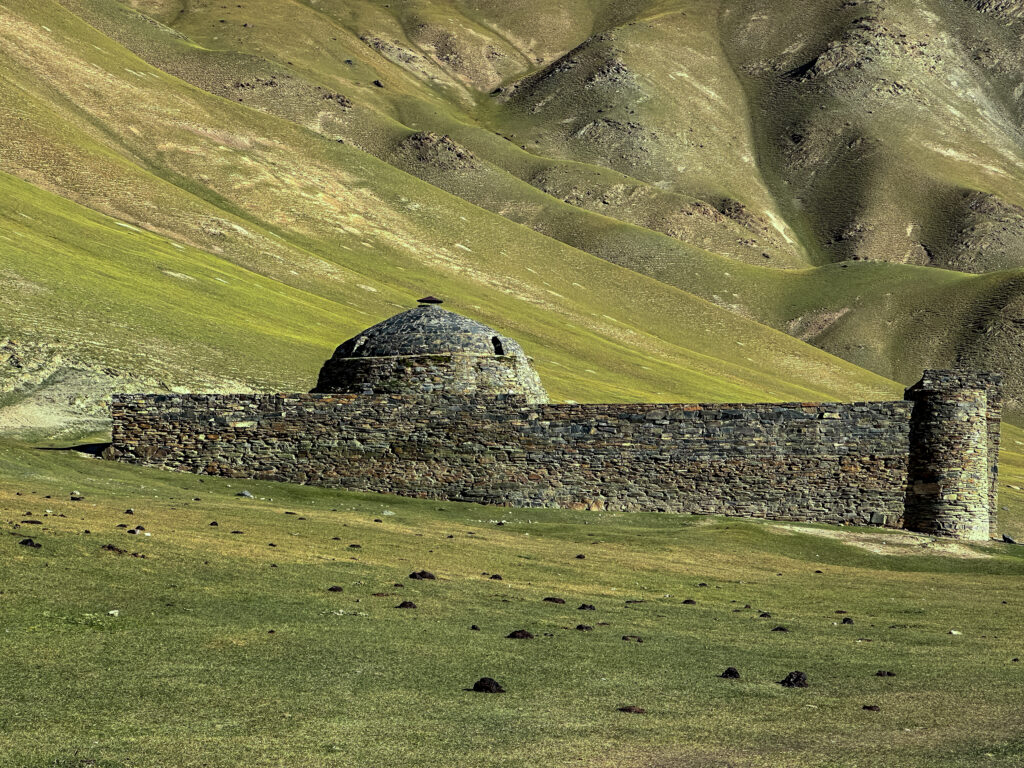
Tash-Rabat Caravanserai is located deep in the mountains of Kyrgyzstan, far from major cities and busy routes. For centuries, this stone structure served as an important stop along the Silk Road, offering shelter to merchants, pilgrims, and travelers crossing the highlands of Central Asia. Today, it remains one of the most atmospheric historical sites in the country, standing almost untouched in a remote mountain valley.
The History of Tash-Rabat
Historians believe Tash-Rabat was built around the 10th or 11th century as a place for travelers to stop and rest while crossing the mountains of Central Asia. It worked almost like a hotel on the road for caravans traveling to and from China — just beyond the mountains was China and the major Silk Road city of Kashgar.
Merchants stayed here to rest, stay safe, and wait out bad weather before continuing their journey. Even the name explains it well: “tash” means stone in Kyrgyz, and “rabat” comes from Arabic and means a fortified place or small fortress.
Architectural Features
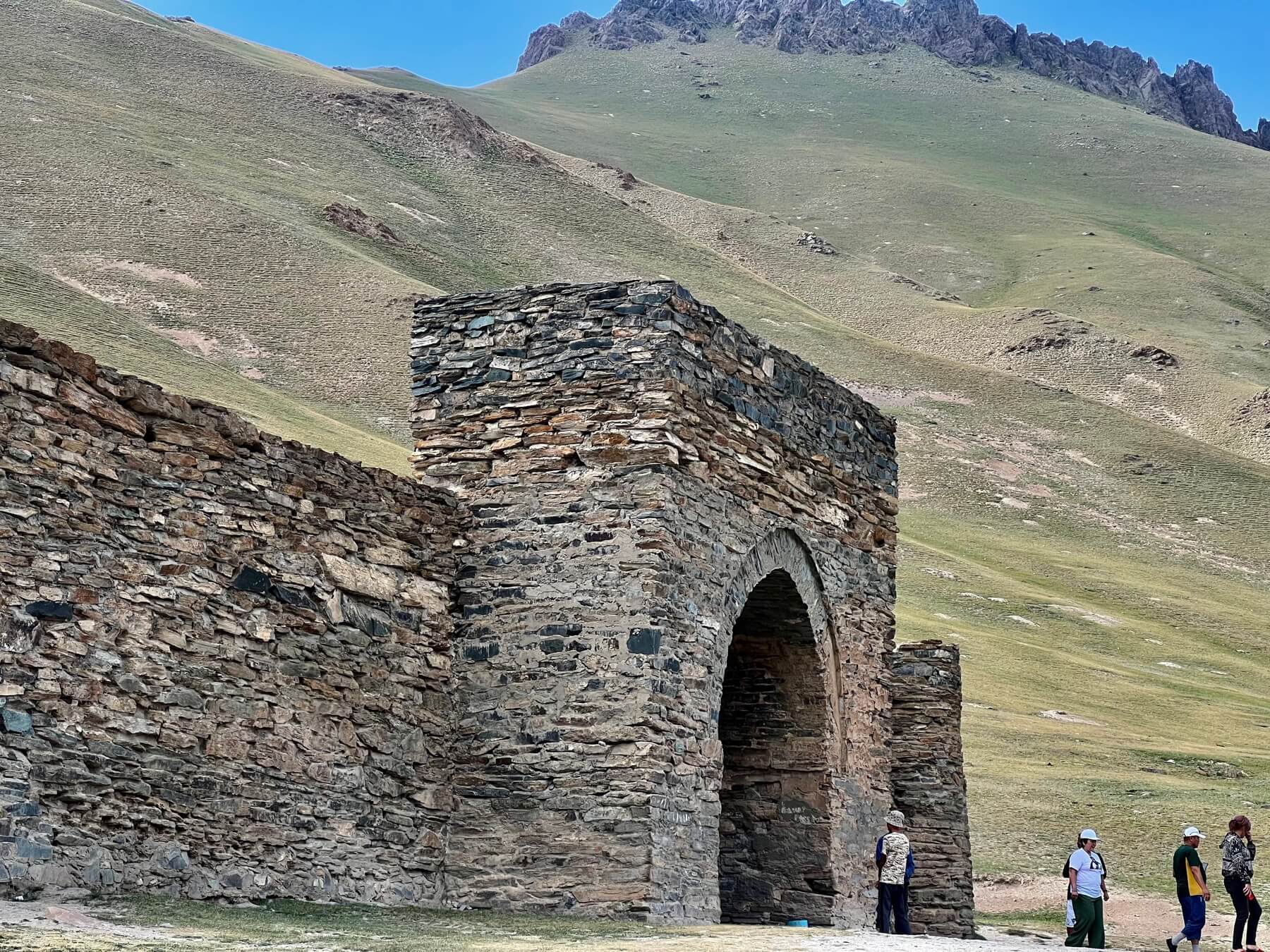
The caravanserai’s architecture is a marvel in itself, featuring a domed central hall surrounded by over 30 rooms, each telling a story of ancient travelers. Its construction, using stone and earth, has stood the test of time, offering a unique insight into the engineering prowess of its creators. It’s a square shape 33m to 35m.
Tash-Rabat Today
Today, Tash-Rabat is one of the most visited historical landmarks in the highlands of Kyrgyzstan and a powerful symbol of the country’s cultural heritage. The site attracts international travelers as well as local tourists, especially during the summer season, when the surrounding valleys come alive with nomadic life.
The importance of Tash-Rabat for Kyrgyzstan is reflected even at the national level — the caravanserai is depicted on the 20-som banknote, highlighting its role as a cultural and historical icon of the country.
Despite its ancient origins, Tash-Rabat is not an isolated monument frozen in time. People still live nearby, maintaining a traditional high-mountain lifestyle. Close to the complex, visitors will often meet a local eje (elder woman) who lives in the area year-round. She looks after the site, welcomes guests, and quietly guards the place, continuing a tradition of care and presence that has lasted for generations.
Thanks to conservation efforts, the structure remains remarkably well preserved. Visitors can enter the stone building, explore its chambers, and imagine the time when merchants, pilgrims, and travelers rested here along the Silk Road. Combined with the vast landscape, fresh mountain air, and human presence that still surrounds it, Tash-Rabat today feels less like a museum and more like a living bridge between past and present.
Visiting Tash-Rabat
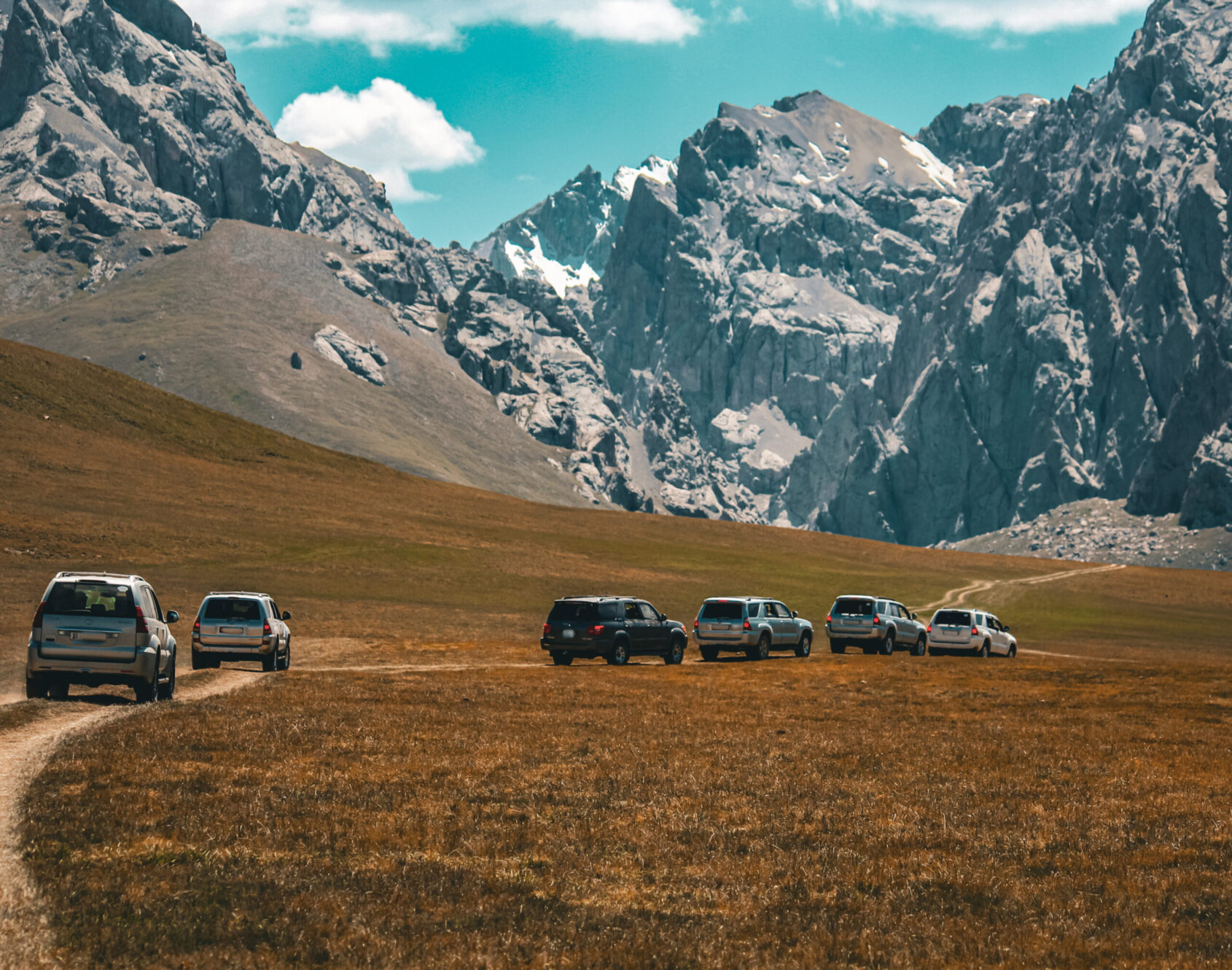
Reaching Tash-Rabat is part of the experience itself. The site is located in a remote high-mountain valley of the Naryn region, far from major cities, and is accessed mainly by car.
The most common route starts from Bishkek. The distance from Bishkek to Tash-Rabat is approximately 465 km, following the main highway Bishkek – Naryn – Torugart Pass. The road is fully paved up to a certain point, after which travelers need to leave the asphalt road and turn toward Tash-Rabat, following the signposted junction.
From this turn-off, the final 15 km lead through a gravel road, crossing a wide mountain valley surrounded by alpine pastures. While the road is generally passable in summer, a high-clearance vehicle is recommended for comfort, especially after rain.
An alternative and time-saving option is to fly from Bishkek to Naryn (domestic flight), and then continue the journey by car from Naryn city to Tash-Rabat. This option is often chosen by travelers who want to reduce long driving hours while still enjoying the scenic landscapes of the region.
Whichever route you choose, the journey offers dramatic mountain views, open skies, and a growing sense of remoteness — preparing visitors for a place where history, silence, and nature come together.
The Experience of Tash-Rabat
Visiting Tash-Rabat is like walking through a portal to the past. The silence of its halls, broken only by the whispers of the wind, invites reflection and a deep connection to the souls who once sought refuge within its walls.
Surrounding Area
The area surrounding Tash-Rabat is a haven for nature lovers and adventurers. From hiking in the Tien Shan mountains to exploring nearby ruins, the region offers a perfect blend of history and natural beauty.
Tash-Rabat in Literature and Media
Tash-Rabat has captured the imagination of many, featuring in literature and films as a symbol of the mysterious and the untamed. Its story is one that continues to inspire and fascinate.
Conclusion
The Tash-Rabat Caravanserai is more than just an ancient relic; it is a bridge to the past, inviting us to explore, learn, and marvel at the enduring spirit of human adventure. Its walls, steeped in history, offer a sanctuary not just to those who passed through centuries ago, but to all who seek to uncover the mysteries of the Silk Road.
FAQs
- What is the best time to visit Tash-Rabat?
- Are there facilities available for visitors?
- How can one respect the cultural significance of Tash-Rabat while visiting?
- What should I bring when visiting Tash-Rabat?
- Can Tash-Rabat be accessed by public transport?