Recommendations from a local guide
Before traveling to Kyrgyzstan, many people ask: what should I bring?
Some pack as if going on a full expedition, while others assume everything can be bought on the spot. In reality, the truth lies somewhere in between.
Kyrgyzstan is not Europe — but it’s also not a completely wild country.
In cities, you’ll find supermarkets, pharmacies, ATMs, and mobile internet.
In the mountains, life is simpler — so it’s not about bringing more, but about bringing the right things.
Below is a practical overview:
what’s better to bring from home, what you can easily buy in Bishkek, and what you don’t need at all.
✅ What’s better to bring from home
(especially if your tour includes hiking or trekking)
Clothing & Footwear
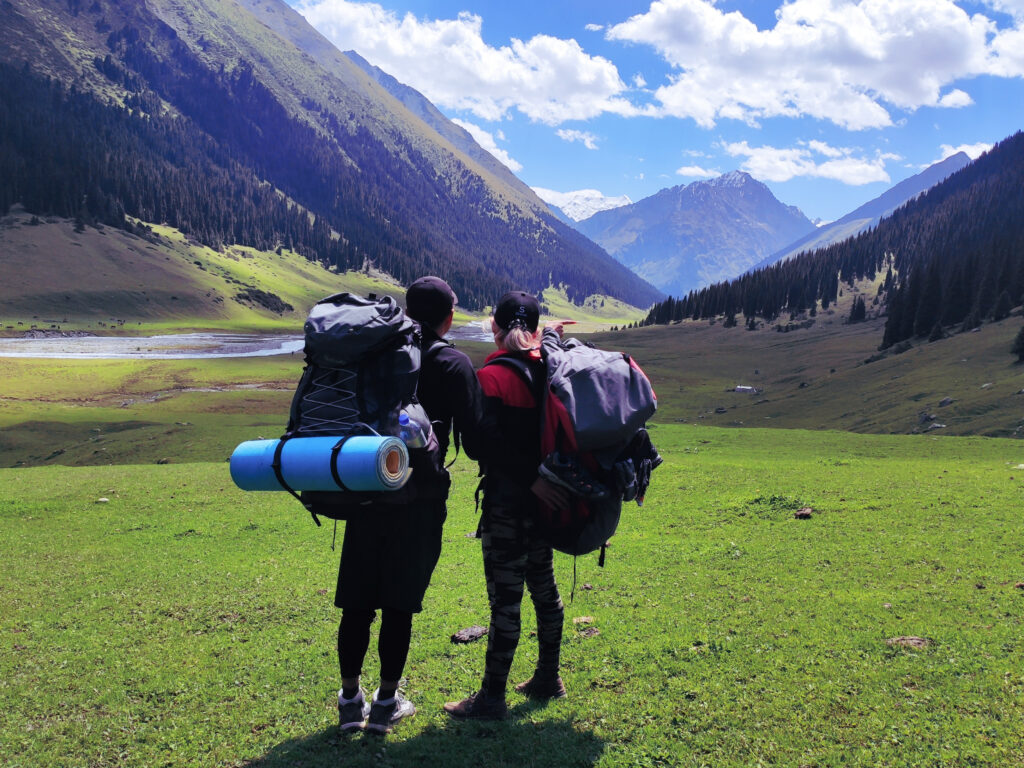
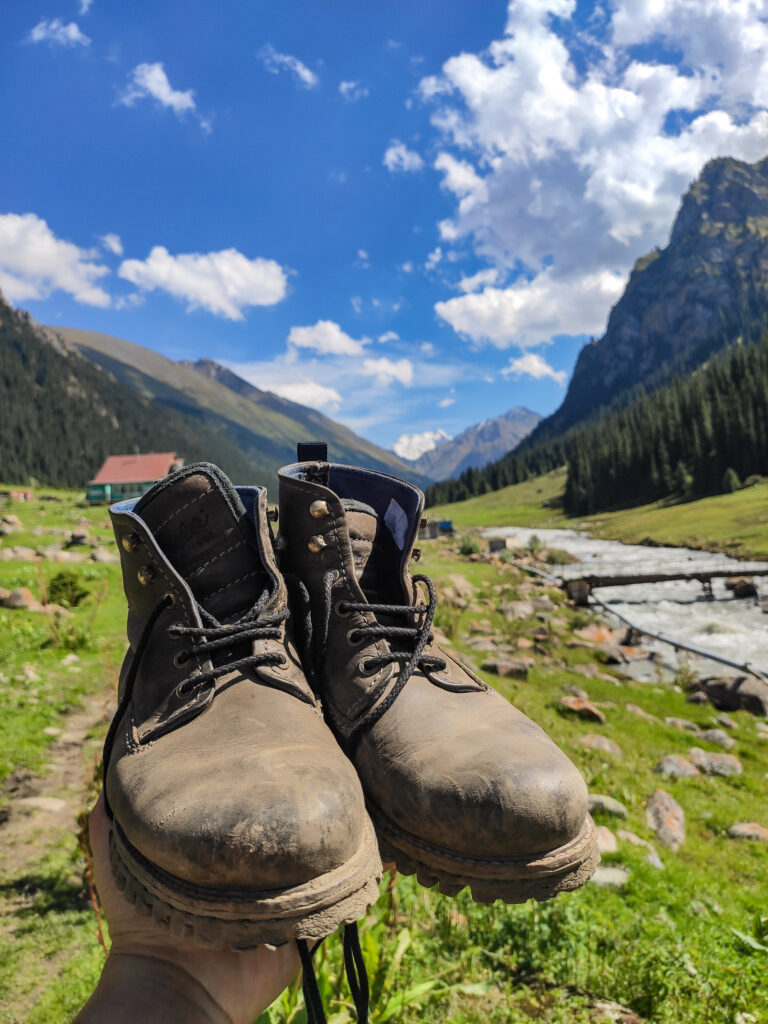
• Trekking boots or trail running shoes (well broken-in)
• Lightweight waterproof / windproof jacket
• Warm mid-layer (fleece or light insulated jacket)
• Trekking socks (2–3 pairs are enough)
• Sun cap + warm hat
• Sleeping bag (only if multi-day trekking is planned)
Personal First Aid
• Personal medications
• Stomach remedies
• Blister plasters
• Micropur Forte or similar water purification tablets (for multi-day treks)
Electronics & Small Items
• Power bank
• Headlamp or small flashlight
• Sunglasses
• Sunscreen
🔌 Electricity & Plug Type
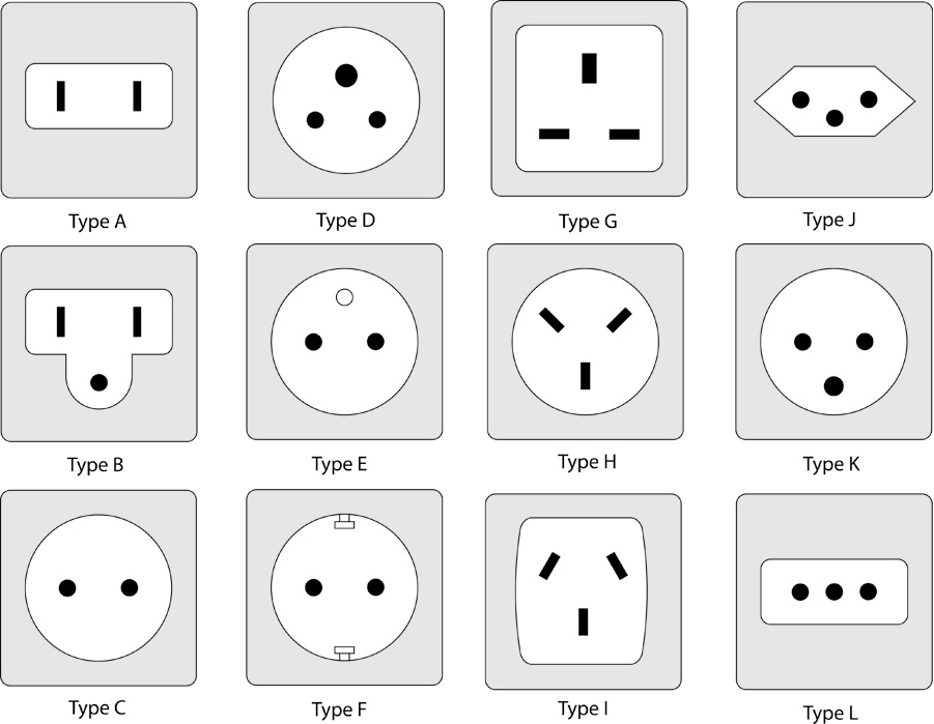
Kyrgyzstan uses Type C and Type F sockets (European standard).
If your charger uses another plug type, bring an adapter.
📄 Documents
• Travel insurance (must cover active/outdoor activities)
• Passport
• Copies of passport & insurance (paper or phone)
💵 Cash or Card?
Cash is essential.
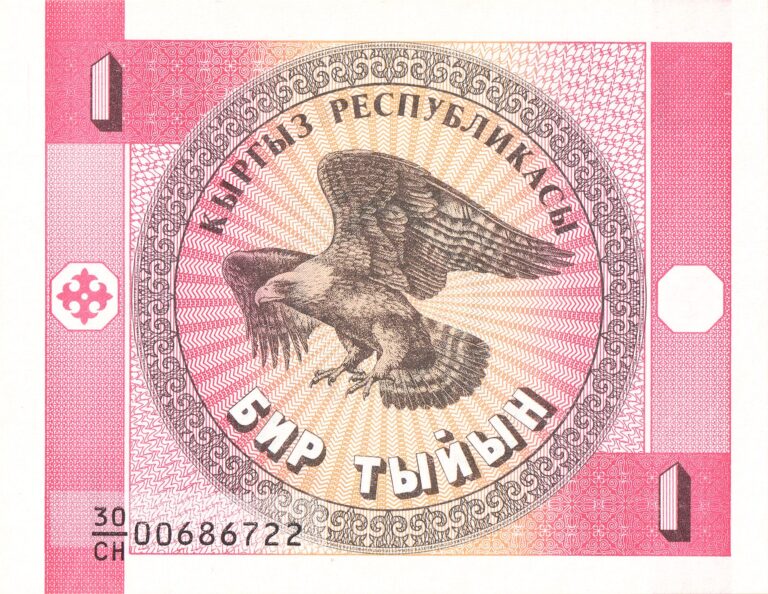
Local currency: Kyrgyzstani som (KGS)
Approximate rate: 1 EUR ≈ 100–105 KGS (early 2026: around 104 KGS)
Important tips:
• Don’t exchange money at the airport — city exchange offices usually offer better rates
• Bring banknotes of 50 / 100 / 200 EUR or USD
• Small notes (20 and below) are often not accepted
• Bills must be clean and undamaged
Cards sometimes work in cities and large towns, but not everywhere.
ATMs are available in major settlements.
From experience: 100–150 EUR per person for one week is usually enough for personal expenses.
🛒 What you can easily buy in Bishkek
• SIM card with internet (much cheaper in the city than at the airport)
• Water and snacks
• Basic outdoor gear
Bishkek has supermarkets and outdoor shops.
This is not an expedition into the desert 🙂
❌ What you don’t need to bring
• Brand-new backpack or shoes
• Camping stoves, cooking gear, extra food “just in case”
• Heavy expedition jackets
Simpler = more comfortable.
⚠️ Most common mistakes
• Bringing too many clothes
• Wearing new, untested shoes
• Expecting European-level service in remote areas
🌦 Weather: why forecasts often lie
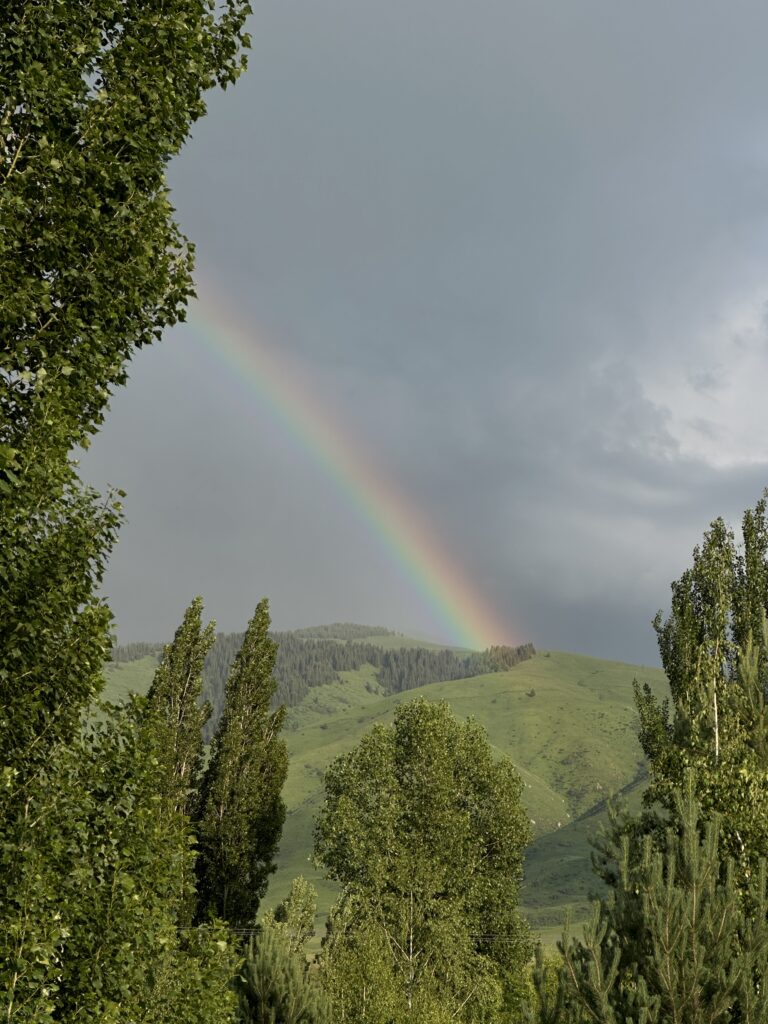
Weather in Kyrgyzstan changes fast.
You may experience sun, rain, wind, and even snow in one day — especially in mountains and on passes.
Wind on passes can be very strong and makes it feel much colder.
Because of this, forecasts show only a general picture.
Flexibility is key: routes can be shortened, simplified, or adjusted for safety and comfort.
In Kyrgyzstan, flexibility matters more than rigid schedules.
🛡 Safety in Kyrgyzstan — honestly
No country is 100% safe, but Kyrgyzstan is generally calm for tourists.
Usually safe:
• Tourist regions
• Mountains and villages
Locals are friendly and helpful.
Main risks on tours come from nature, not people.
Be careful as anywhere:
• Watch belongings in crowded places
• Don’t leave valuables unattended
• Avoid unfamiliar areas late at night
Serious problems with tourists are rare.
🚗 Transfers: why 200 km can take a whole day
Kyrgyzstan is mountainous.
Distances look short on the map but take time.
• Narrow roads
• Weather conditions
We don’t overload itineraries with too many kilometers.
The road itself is part of the experience.
🚻 Practical questions
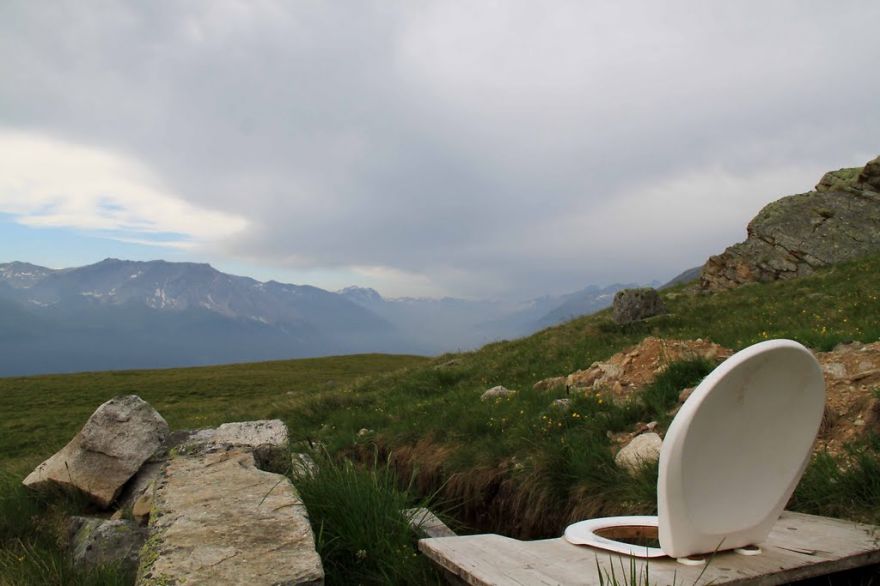
Toilets
Cities: normal toilets
On the road: simple outdoor toilets or nature
Showers
Cities & guesthouses: usually available
Yurt camps: shared or scheduled
Internet
Cities: good
Mountains: weak or none (consider it digital detox)
Medicine
Pharmacies in cities
Tell your guide immediately if something feels wrong
🧭 A day in the life of a guide
A guide’s job starts long before meeting guests.
Every evening:
• Check route & weather
• Prepare backup plans
• Confirm with driver & accommodations
On the route, decisions are based on:
• Weather
• Group condition
• Time & daylight
• Road situation
If something changes:
1. Safety first
2. Group comfort second
3. Program third
Often Plan B becomes the favorite.
✅ Final Thought
Good preparation isn’t about carrying more — it’s about understanding where you’re going.
These are real-life recommendations, not strict rules.
Our goal is to prepare you properly and take care of you from planning to your flight home.
If you’re unsure what to bring for your specific route — just ask us in advance.